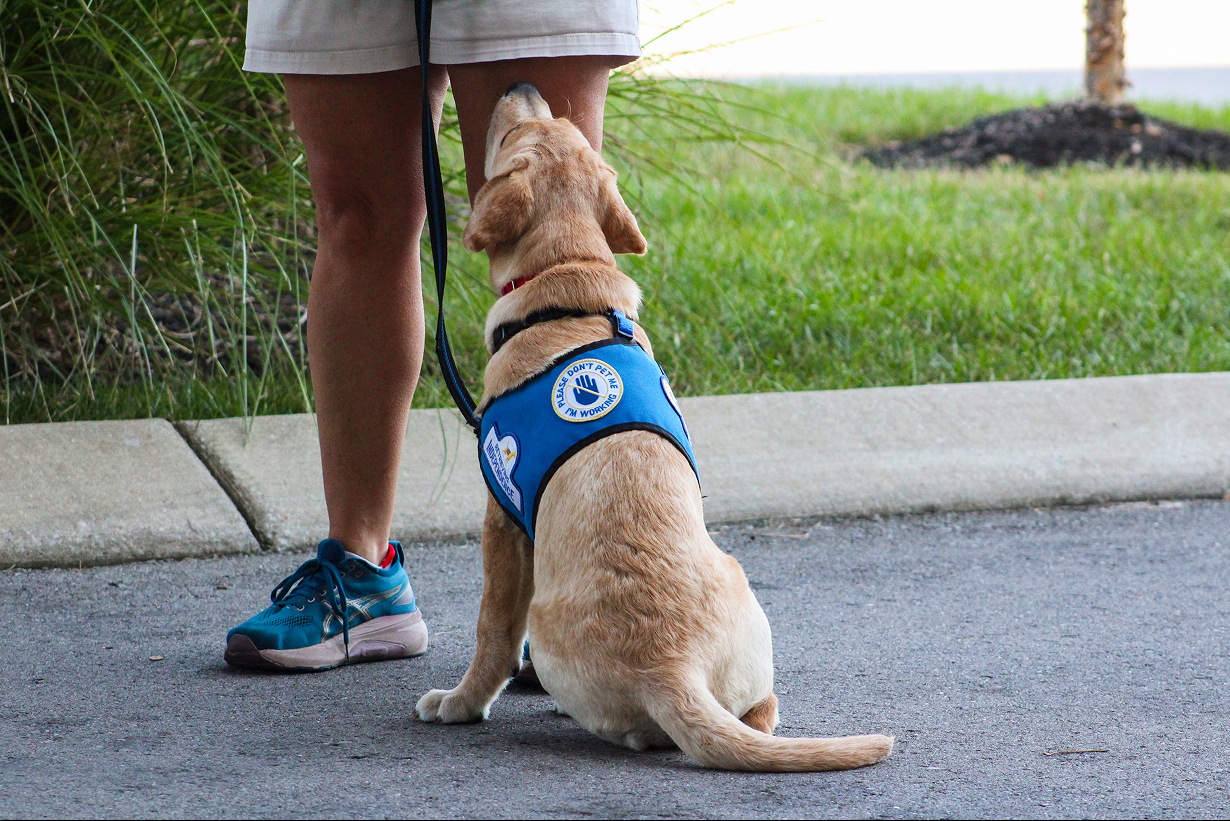
Mike was incarcerated when he met Birdie.
For nearly two years, they were inseparable. He trained her to retrieve medication, open doors, and turn lights on and off. She slept in his room and went everywhere he went. A service dog had given him far more than a job to do.
It was giving him a future.
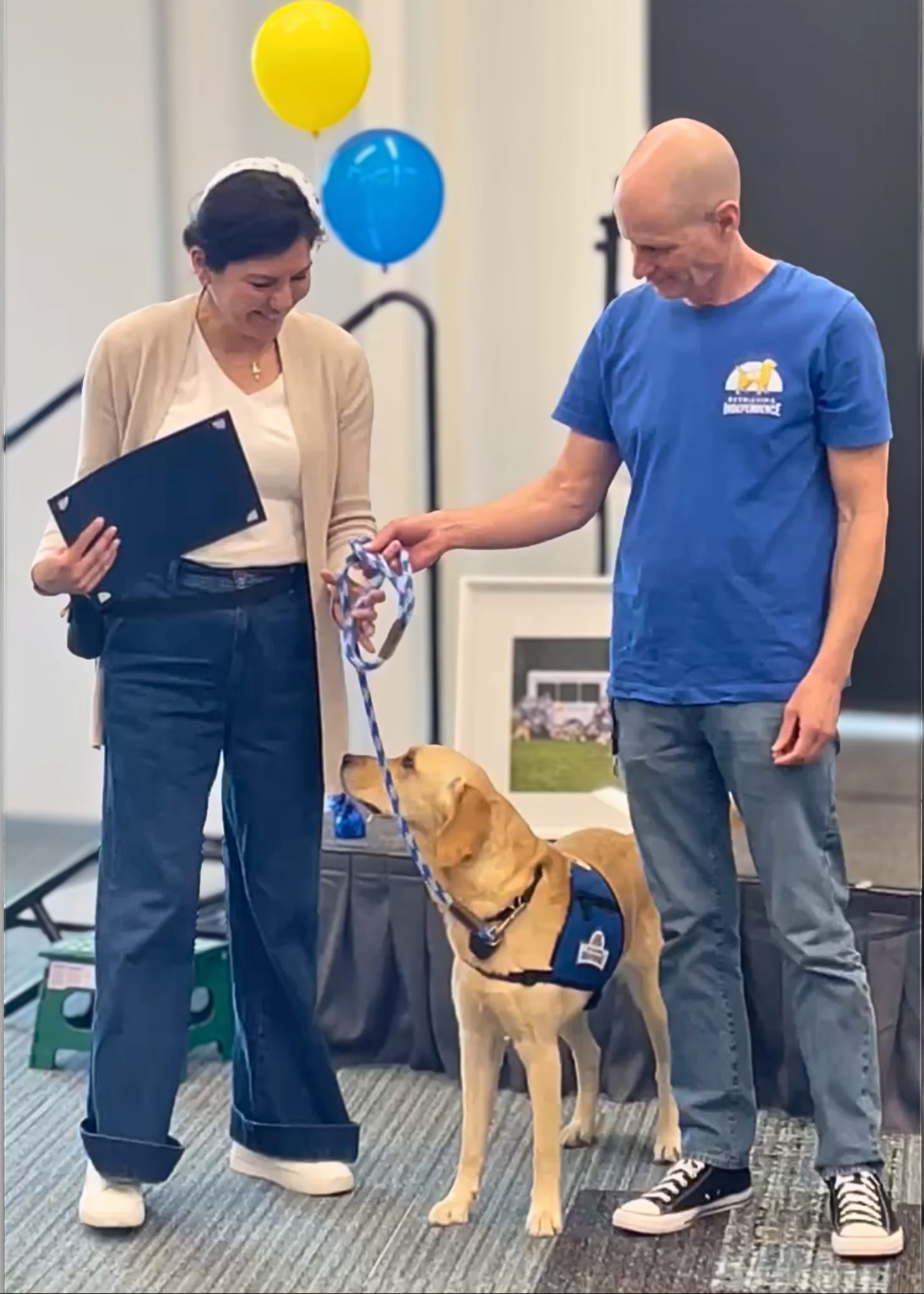
When Mike was released from prison, he got to attend Birdie's graduation.
Mike stood before the crowd as the commencement speaker — a man who had trained a service dog behind bars, now passing Birdie's leash to the person whose life she would change completely.
"Behind bars, many of us are hungry for ways to give back, to love, and to sacrifice for others. This program gives us that... and the dignity of doing something meaningful."
Then Mike accepted Birdie's graduation certificate, watched her go, and walked away knowing he'd done something that mattered.
That transformation — from a cell, to a podium, to a handoff — is what Retrieving Independence makes possible.
The Program Nobody Else Is Running
Retrieving Independence is a Nashville-based nonprofit that breeds, trains, and places service dogs with people living with physical or psychological disabilities.
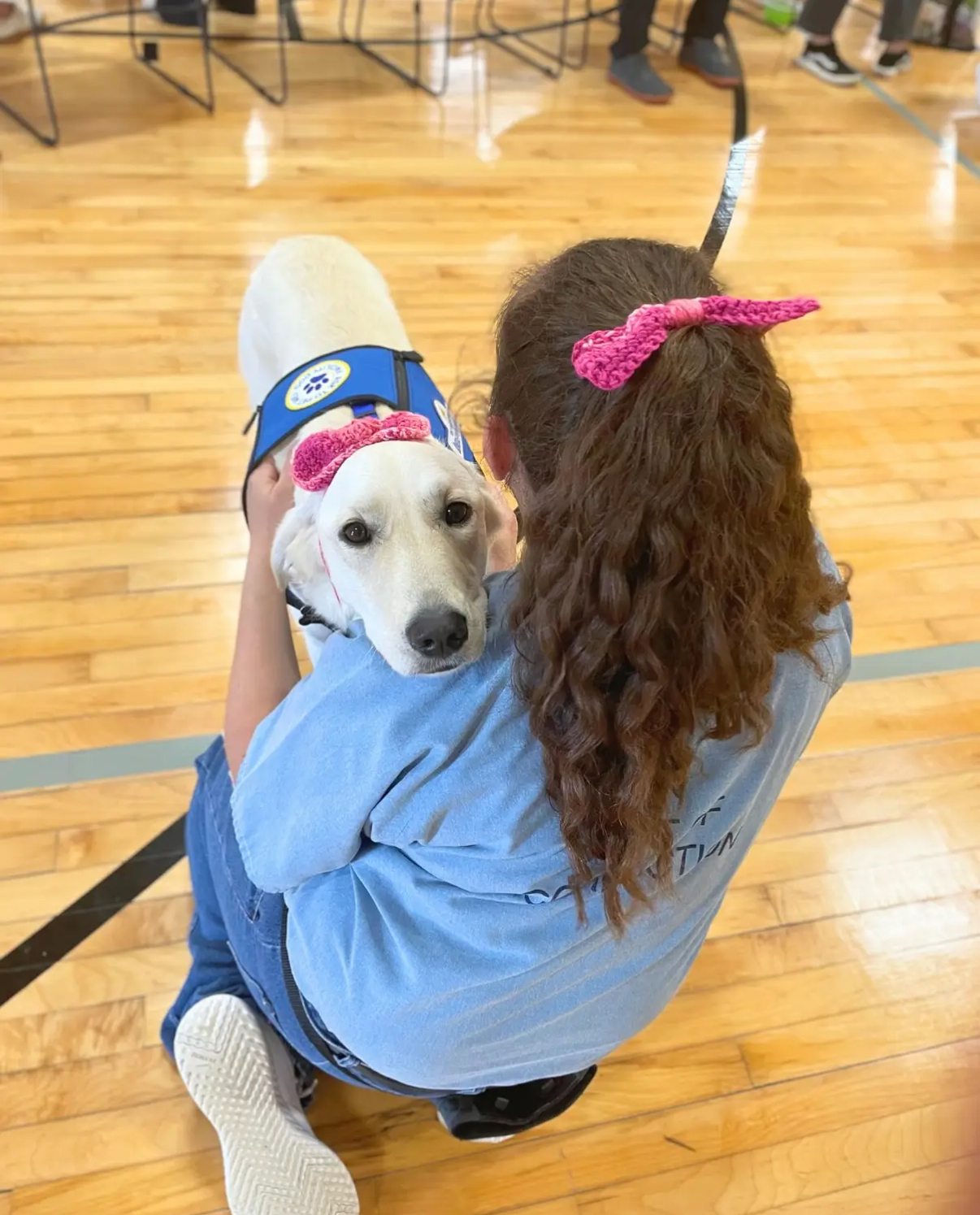
What makes it different: inside three Tennessee correctional facilities, incarcerated trainers live alongside service dogs for two years. Each dog is paired with two trainers and lives in their room full time — attending classes, church services, peer recovery programs, and work assignments together. When trainers work suicide watch units, the dogs go there too.
Retrieving Independence staff regularly lead classes inside the prison, teaching trainers how to build skills, solve problems, and communicate effectively with their dogs. Every week, a therapist leads support sessions on grief, conflict resolution, and emotional health. The program becomes much bigger than learning how to train a service dog.
Some trainers say it's the first time they've experienced unconditional love.
Others say the dogs taught them to express care in ways they'd never been shown.
One put it plainly: "A place where you get treated like a person again."
The program has maintained a 0% recidivism rate. Five formerly incarcerated trainers have built careers in animal care — including Mike, who now manages a large pet store.
But before any dog reaches a prison training program, volunteers have to get them ready.
The Village Behind Every Service Dog
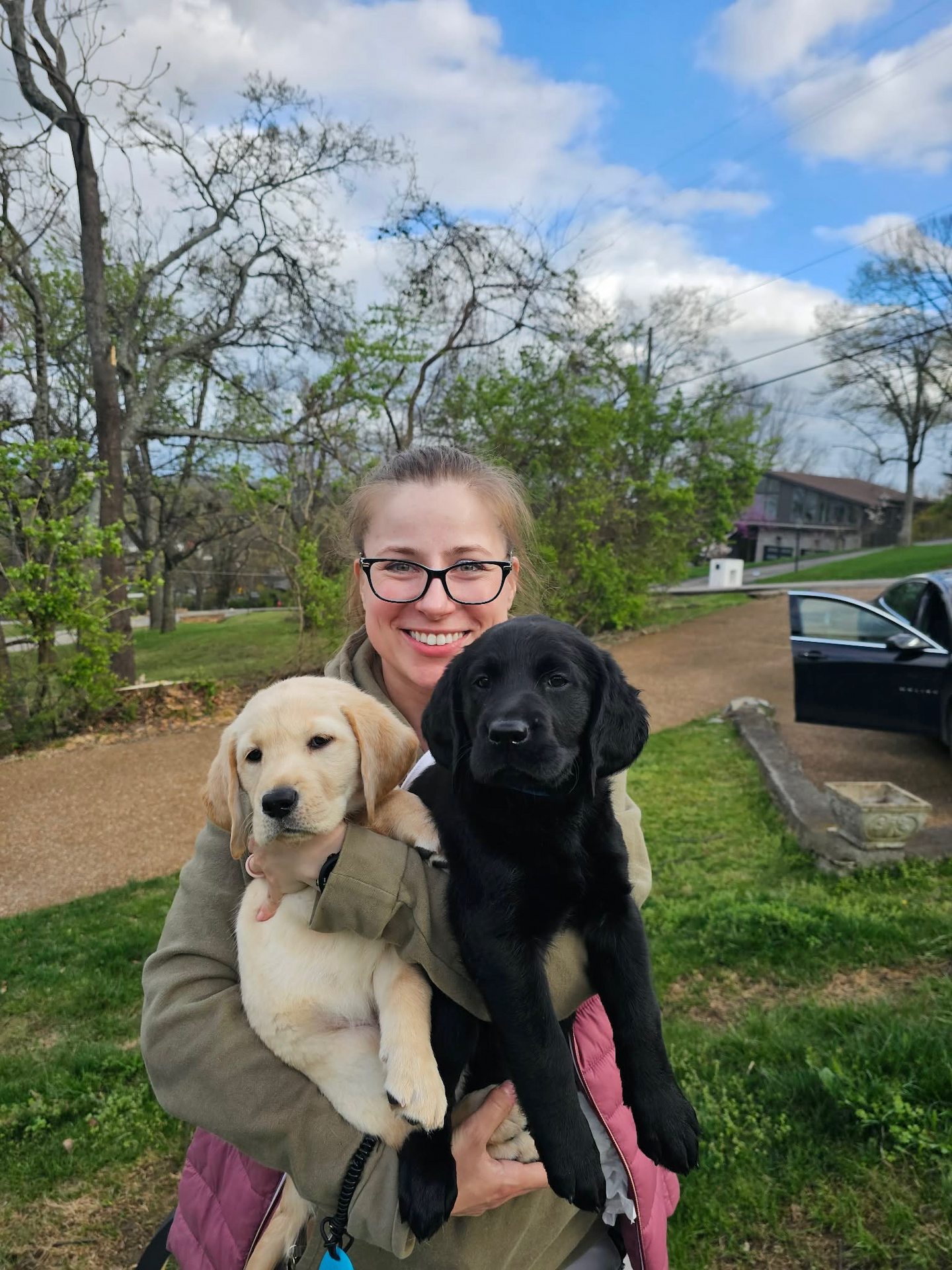
Earlier this year, seven puppies were born through Retrieving Independence's newly relaunched breeding program — and the small nonprofit needed help fast.
Volunteers showed up immediately, filling shifts around the clock at the breeder host's home. Some came for feedings and cleanup. Others sat on the floor handling tiny paws and ears, introducing the puppies to textures, toys, smells, and car rides. They pushed puppies through the neighborhood in strollers. They helped the dogs learn, early and gently, that the world outside is safe.
"The first 16 weeks shape so much of how these dogs experience the world," says Kelsey Fernandez, Chief Operating Officer at Retrieving Independence. "One day these dogs will walk beside someone who depends on them for safety. Volunteers get them ready."
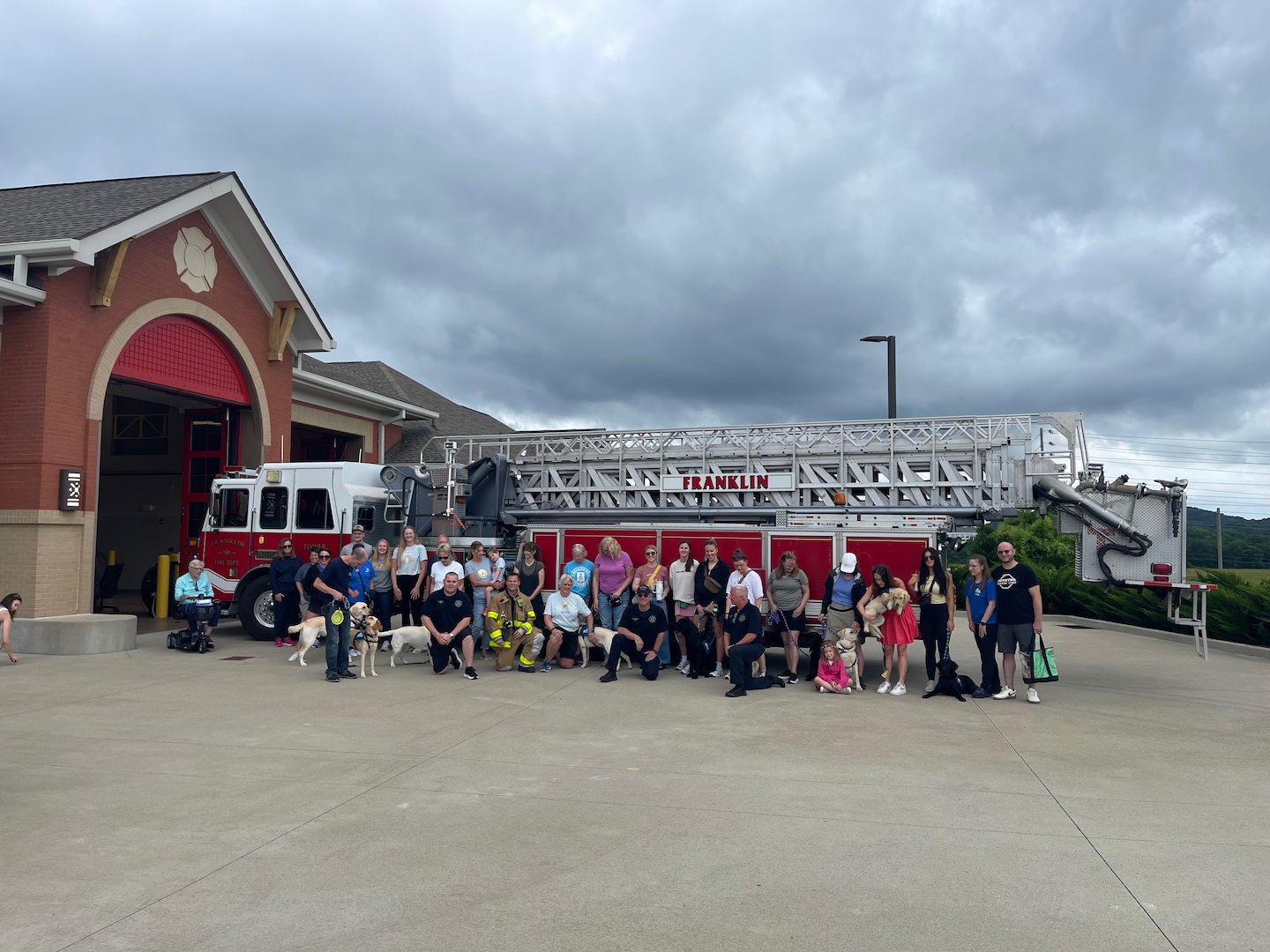
As the puppies grew, volunteer Puppy Raisers took over — bringing them into restaurants, grocery stores, schools, and workplaces, anywhere a future service dog might need to go without flinching. Without these volunteers, the pipeline stops. No amount of training inside a correctional facility can happen if the dogs aren't socialized and ready first.
Around six months old, each dog enters the prison program.
And the rest, as Mike will tell you, changes everything.
How One Graduation Changes Everything
Kelsey Fernandez didn't set out to run a service dog nonprofit.
She was a college student when she raised her first yellow Labrador — a puppy named Anne in a little yellow vest, learning day by day to stay calm in crowds and noise and chaos.
Then came graduation day.
Anne stood beside her new handler: a 74-year-old man, blind since birth, who walked with a limp. Anne moved at his pace without being taught to. She paused at raised cracks in the sidewalk to warn him they were there. He later said Anne was the best guide dog he ever had, "a match made in heaven."
Kelsey watched Anne graduate and felt something shift.
"All the work, the time, the love you poured into them — suddenly you see exactly what it was for," she said. "I walked out of that ceremony thinking, 'How can I make this my life's work?'"
She found a way. And now, every dog that graduates carries years of work from volunteers who gave something of themselves so a stranger could live more fully.
Sometimes it's independence they're giving.
Sometimes it's purpose.
Mike will tell you those two things are often the same gift.
Retrieving Independence volunteers help raise, socialize, and care for future service dogs. Unison helps coordinate puppy care shifts and community events — so the people behind the program can focus on the dogs.